
North Andover Previous Residents by Era
A backward address search works best as an era map. Deeds establish a recorded ownership trail, while directories and census schedules help separate an owner from someone who actually occupied the address. The table does not promise an unbroken run. It shows the local ranges that were located, the office or collection to approach, and the role each source can play when tracing past residents.
| Record source | Located years | Where to use it | Address evidence |
|---|---|---|---|
| Essex and Northern Essex deeds | 1869 to present in Lawrence; older Essex records before that | Northern Essex Registry, Salem, or State Archives | Recorded owner, parties, date, consideration, and legal description |
| Historic index books | 1640-1799, 1800-1854, 1855-1950, 1951-1963, 1964-1978 | Registry index images and archive records | Surname, book, and page bridge when electronic indexing is thin |
| North Andover directories | Selected 1856-1983 runs | Massachusetts State Library and local digital gateways | Occupant, work, spouse or widow notation, and address snapshot |
| House guides and voting lists | House guides 1928-1953; voting lists 1924, 1940-42, 1946-59, 1961, 1966, 1978, 1980 | State Library reference collections | Address-to-occupant or dated eligible-voter evidence |
| Federal census and Sanborn maps | Census 1790-1950; six 1903 map sheets | NARA, library databases, and Library of Congress | Household snapshot and a dated building footprint |
Start with a parcel card if the address is current, then use the deed reference to move back. For an address from the middle of the twentieth century, a house guide and a nearby census year may be the quicker first check. Building permits can add construction or alteration dates, but the online permit path uses a login and older cards belong in a request to the town Records Access Officer archive.
Fix a North Andover Address First
Write down the street spelling, primary number, unit or lot, assessor parcel ID, and any map or deed-book reference before looking for prior residents. The North Andover assessor card distinguishes the physical situs from the owner mailing address. A mailing address may be out of town, held by a trust, or used by an agent. It is a useful lead, not proof that the named owner lived at the building.
The legal description is the steadier bridge when a street number has shifted or a lot was divided. It may identify a plan, lot, book and page, or metes-and-bounds description. Preserve the form used in the document. North Andover records also cross the 1855 split from Andover, so an older record may say Andover or North Parish. The exact year of any North Andover street-renumbering program was not located, and should not be guessed.
North Andover Previous Residents in Deeds
The Northern Essex Registry of Deeds is the main recorded-land path for North Andover. Its district records begin in September 1869. Use the current owner and parcel details to identify the purchase deed, then use the deed itself rather than a search-result line. The document connects a buyer to a seller, records the date and often points to the prior transfer. That is how a chain is built one recorded link at a time.
- Open the assessor or WebPro parcel card and record the current owner, parcel ID, last sale, and deed or book-and-page reference.
- At the Northern Essex Registry of Deeds, search the owner as grantee and identify the purchase document that matches the parcel.
- Record the document number or book and page, recording date, consideration if stated, grantor, grantee, and full legal description.
- Follow the prior-reference clause in the deed, then search the earlier party as grantor or grantee to locate the preceding transfer.
- If the owner disappears because of an estate, trust, or missing conveyance, check the Essex probate path before treating the gap as a sale.
- When the chain reaches the September 1869 district boundary, continue through older Essex records in Salem and the Massachusetts State Archives.
- Grantor / grantee
- A grantor transfers an interest in land. A grantee receives that interest. Their roles can change in the next deed.
- Chain of title
- A dated sequence of recorded transfers and related instruments for the same property. It is not a list of every person who lived there.
- Legal description
- The deed's formal way of identifying land through a lot, plan, bounds, or earlier reference. It can outlast a street-number change.
- Criss-cross directory
- A reverse directory or house guide that starts with a street and number, then names a listed occupant.
- Enumeration district
- The geographic area assigned to a census taker, useful when an address is hard to locate in a census schedule.
North Andover Deeds Before 1869
The 1869 boundary matters. The local house-history guide explains that deeds for Andover, Lawrence, Methuen, and North Andover from September 1869 to the present are at Northern Essex. For an earlier deed, follow its references into older Essex County material at Salem and, for the oldest books, the Massachusetts State Archives. A failed North Andover search is not enough to close the trail.
Historic index images are arranged in the periods 1640-1799, 1800-1854, 1855-1950, 1951-1963, and 1964-1978. Electronic coverage has gaps for many pre-1979 books. Search page by page, inspect adjacent index pages, and write down the book and page before moving on. This is slower than a modern name search, but it is the right way to handle an early North Andover address.
For a practical overview, the local house-history guide explains the Northern Essex cutoff, the deed-chain sequence, and the older-record fallback. It also notes that the Northern Essex office has been at 1 Union Street since November 2019.
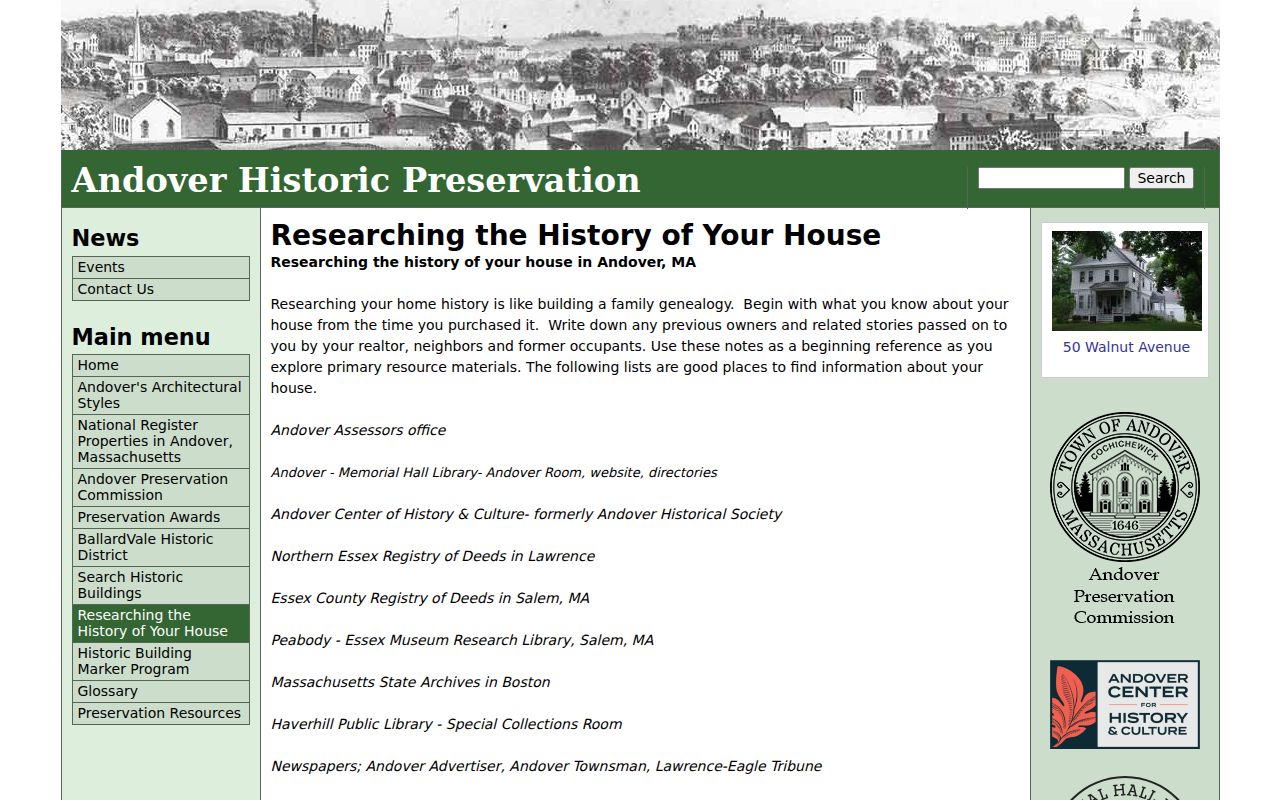
Use the guide as a method, not as proof of a particular household. The deed image and its references remain the evidence for each link.
North Andover Past Residents at the House
Ownership does not settle occupancy. The selected North Andover directory holdings run from 1856 through 1983, and the reverse house-guide layer covers selected years from 1928 through 1953. For each address, read the house-guide entry first, transcribe the listed name exactly, then find that name in the alphabetical section for occupation, possible spouse, business address, and residence notation. Repeat in the nearest earlier and later volumes rather than assuming every year was published or preserved.
Pair those directory snapshots with federal census schedules from 1790 through 1950. Start by matching the nearest directory year to the available census, then check the street, neighbors, age, birthplace, and occupation for consistency. A directory can be compiled months away from a census date. It may list a boarder, renter, proprietor, widow, or former occupant differently from the census. The detailed shelf guide belongs on the North Andover Directory Book page; here, it is one evidence layer in an address trail.
The State Library's voter-list runs for 1924, 1940-42, 1946-59, 1961, 1966, 1978, and 1980 add another dated residence clue for eligible voters. They are not a complete household record. Keep a simple worksheet with the source, date, address form, person, and role, so a previous-resident name never becomes a claim about a different decade.
North Andover House History in 1903
Maps and permits tell a building story, not a resident story. The North Andover split from Andover in 1855 changes how older books and directories are labeled. The 1903 Sanborn collection helps fix the physical setting afterward: it has six sheets, not one town-wide image. Compare its street label and footprint with the closest directory and deed date before deciding that a modern address refers to the same building.
The Library of Congress six-sheet 1903 Sanborn collection is a public-domain visual check for the built environment.
The Massachusetts Registry of Deeds town locator confirms that North Andover belongs in the Northern Essex district.
That district check keeps a deed search from being sent to the Salem registry when the document belongs in Northern Essex.
For later changes, OpenGov permit records can show an application, contractor, status, and work date when available. The applicant may not be the owner or occupant. Ask the RAO for older permit cards, certificates of occupancy, demolition or subdivision records by address and date range, instead of inventing a construction date from an incomplete online result.
North Andover Previous Residents at Trail Endpoints
When a name leaves a directory or deed trail, look for an explanation before moving to a new person. The North Andover Historical Society archive has an obituary index, cemetery and church materials, people photographs, surname files, and street listings. Its Old Center Collection spans 1852-2012. An obituary can identify kin, burial, or a former address, but it does not prove that someone still lived there at death.
The Historical Society archive is an inquiry route rather than an open statewide name index. Essex probate may add a fiduciary, heirs, or property reference when an estate sits between two deed entries. The state explains which historic probate materials are available online, including Essex indexes, record books, and file papers.
See the historic Essex probate availability guide before choosing an index, book, or court request.
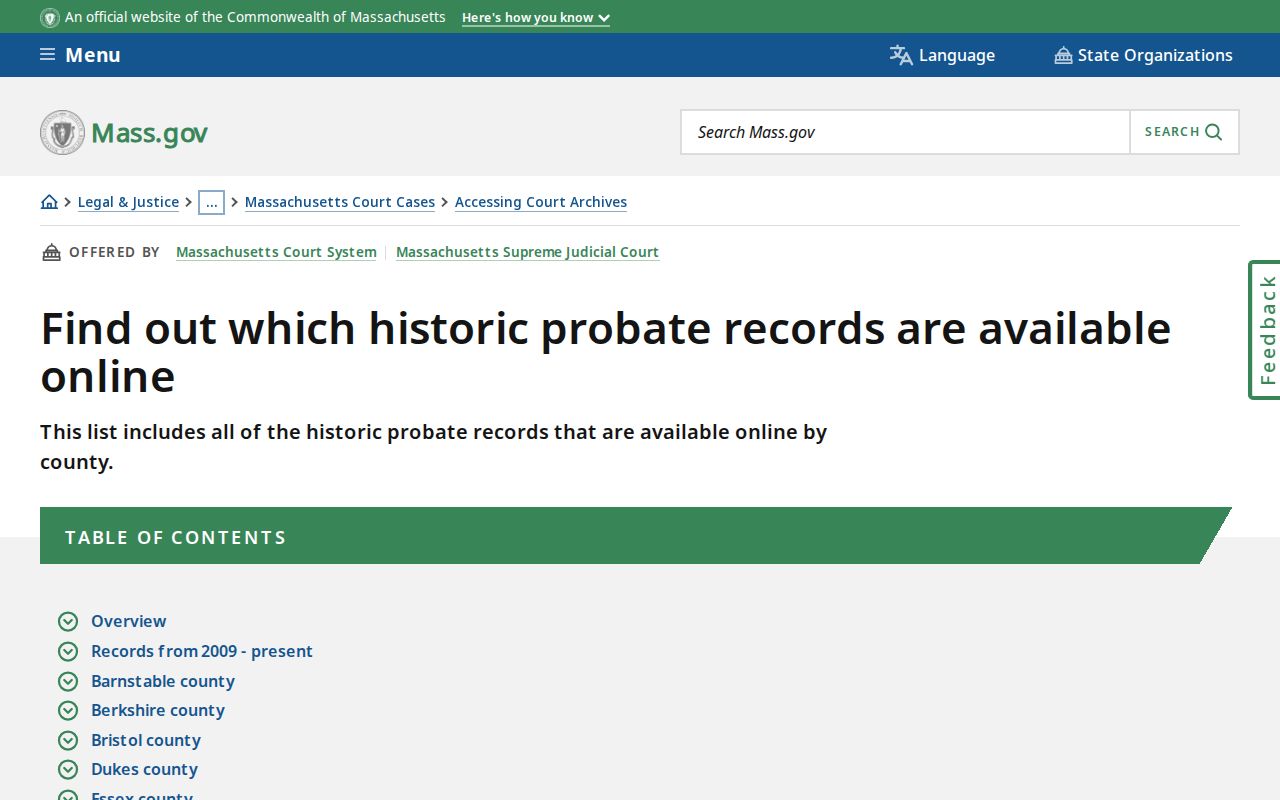
Probate is most useful as an ownership and family-history bridge. It should not be used to infer a present address for any heir or relative.
Use North Andover Address History Carefully
Past residents research is well suited to house history, family history, reconnecting a name to a dated place, and understanding a neighborhood's development. It is not a complete list of people at an address. Renters, household members, utility customers, delivery information, protected voters, and confidential addresses may not appear in public records. A deed party, permit applicant, or directory entry always needs its date and role attached.
Lawful use. Use North Andover previous residents records for personal historical research and civic curiosity. Do not use an old address trail to watch, pressure, harass, or harm a living person.